
Registered installation company · Charge points across the whole province

EV charger installation on the Costa del Sol

No province in Andalusia has more electric cars than Málaga, and yet charging away from home is still a sport: points that are occupied, out of order or priced like petrol. We install your wallbox where you park — home, garage space or business — and hand it over legalised, with its certificate and the IRPF tax deduction ready to claim.


+500+Points installed
24 hFirst response
100%Certified chargers
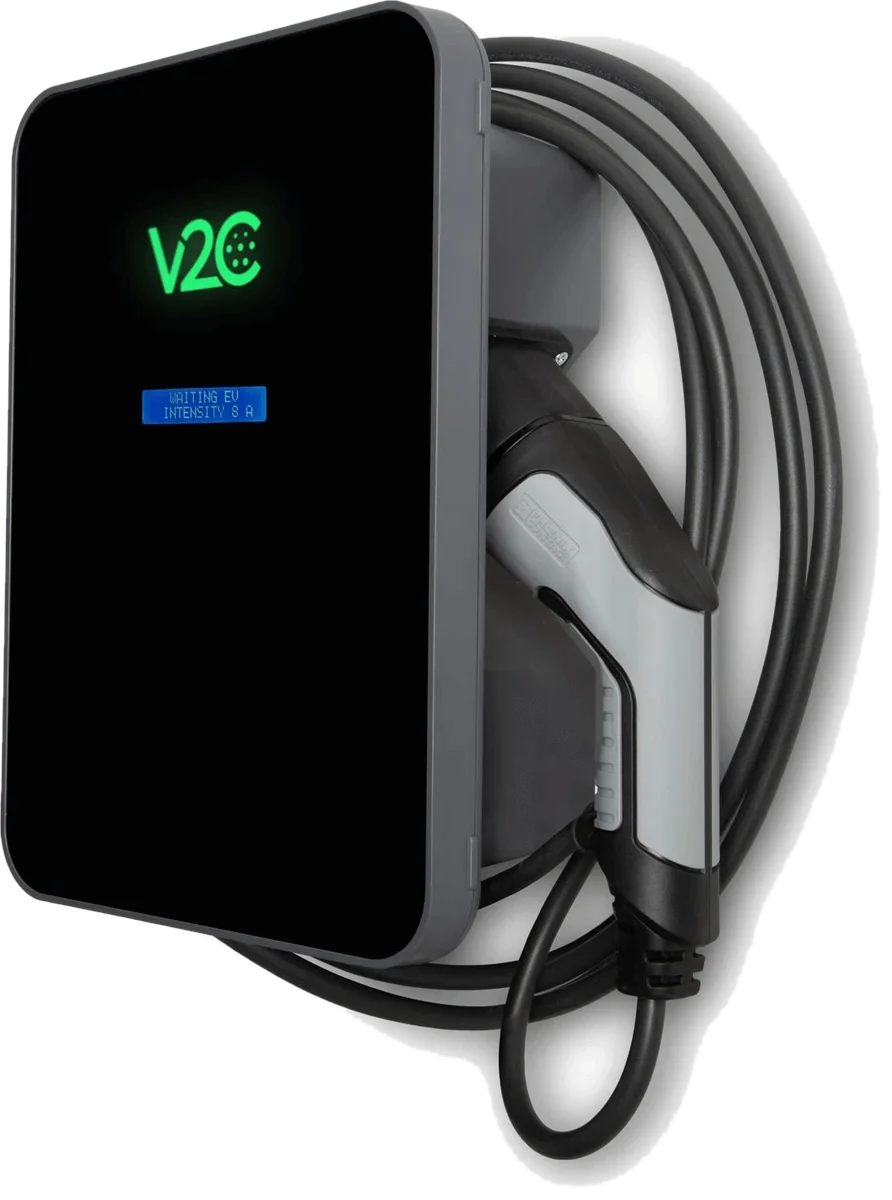
V2C wallbox with cable and Type 2 connector, the EV charger we install across the Costa del Sol
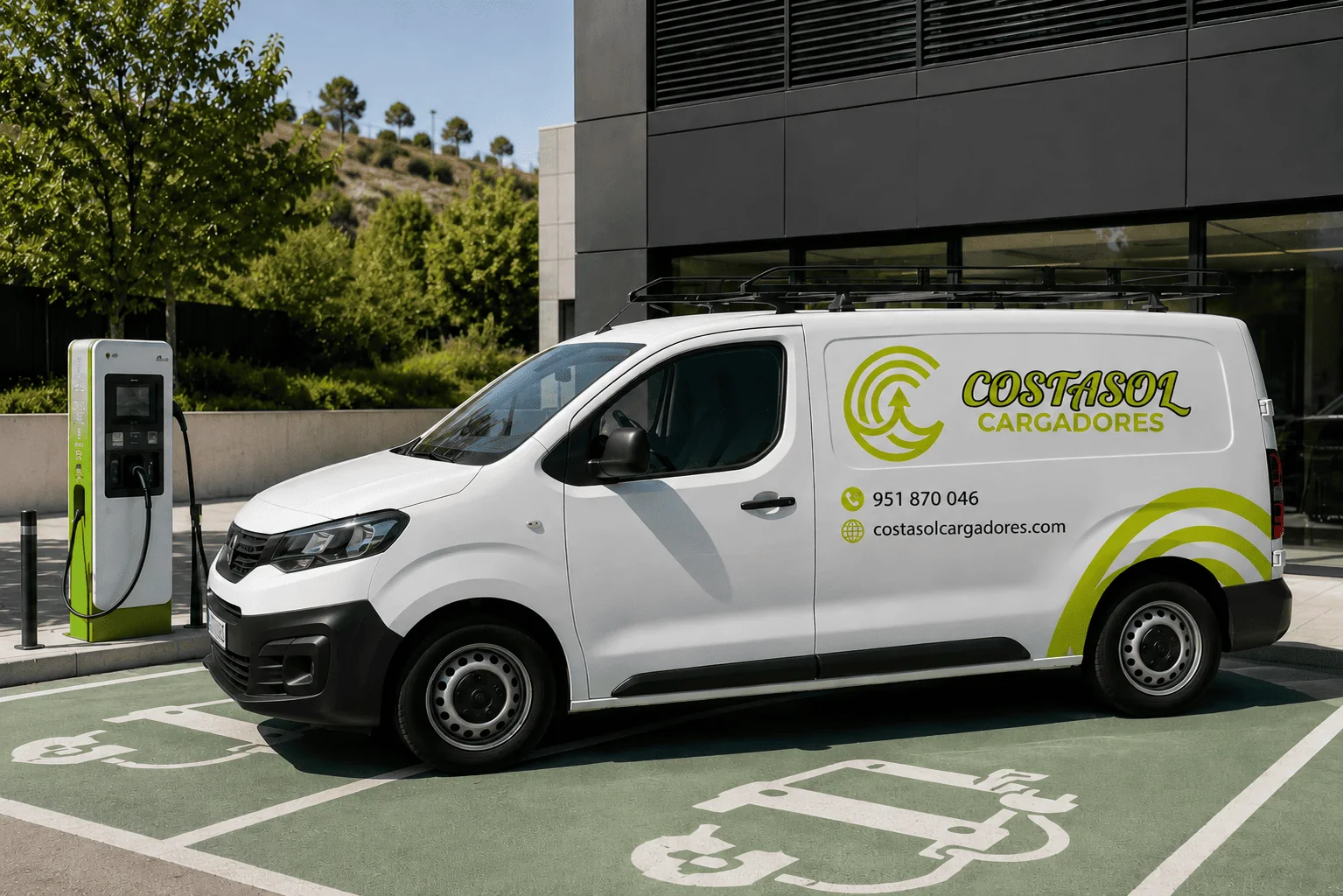
Furgoneta rotulada de Costasol Cargadores junto a un punto de recarga: empresa de instalación de cargadores eléctricos en Málaga
No obligation

Get your quote now

No obligation Registered installer Certificate & legalisation included

Request received!

We now have your installation details. We will get in touch shortly with an initial price guide and, if you want to go ahead, book the free site survey. In a hurry? Give us a call and we will look at it now.

951 870 046
Where we install

EV chargers for homes, communal garages and businesses

Every garage calls for a different installation. Find your case and you will see what yours involves; the quote, in all three, comes with the first call.

Home

Detached house, villa or townhouse

With the car parked on your own plot or in your garage, the job is short and the result immediate: a wallbox wired into your supply, set to charge in off-peak hours and usually ready the same day. The typical case in Alhaurín de la Torre, Rincón de la Victoria or any coastal development.

Read more
Community

A space in an apartment block garage

The most common situation in Málaga city. A written notice to your community of owners — no vote required — and we run the line to your space with your consumption metered separately. We handle the notice, the cable route and the electrical certificate.

Read more
Business · Fleet · Hotel

Businesses and fleets

From a single point for customers to a whole car park with power management and per-user billing: Costa del Sol hotels, delivery fleets, dealerships and offices at Málaga TechPark. We also look into grants for small businesses on industrial estates.

Read more
Guide prices

How much does EV charger installation cost on the Costa del Sol?

We publish our ranges because almost nobody in this search does, and comparing blind is never cheap. What most affects the final figure is the distance in metres between your consumer unit (or your meter) and the charge point; the firm number is closed in writing after the survey.

Type of installationGuide rangeWhat makes the difference
Detached house or villa €900 – €1,600turnkey, VAT incl. Short run to the consumer unit; a day’s work at most.
Space in a communal garage €1,200 – €2,000turnkey, VAT incl. The metres from the meter room and metering the consumption individually.
Business, fleet or hotel from €1,500per point, with survey Number of points, power sharing and per-user consumption control.
Equipment only (wallbox) €400 – €1,500by model Connectivity, metering, solar management or three-phase version.

The four variables in your quote

A

Metres of cable run

The big line item. Cable, trunking and labour hours grow with every metre between the electrical source and your space.

B

The type of work

Clipping surface tray in an open garage is not the same as crossing floor slabs or chasing walls in an old building in the Centre.

C

Power and supply

Jumping from a 7.4 kW single-phase to an 11–22 kW three-phase changes the equipment, the cable cross-section and sometimes the electricity contract.

D

The extras

Solar surplus management, a meter for your space, a control app or load balancing between several cars: they add function and a little to the figure.

Before you sign the cheapest one: many low quotes are low because they leave out the certificate, the Industria registration and the protections the regulations require. Ask for the full breakdown — we provide it by default — and only compare offers that include the same. And a figure to do your own sums with: in off-peak hours, 50 kWh of battery costs between €5 and €8.

Turnkey

What the wallbox installation includes, from start to finish

A charger hung on the wall without paperwork is half an installation. Ours is handed over complete: equipment, work, legalisation and support, in the same quote.

The equipment

  • A wallbox from a proven brand (V2C Trydan, Wallbox, Circutor, Veltium, ABB or Orbis), chosen for your car and your installation, not from a catalogue.
  • Type 2 connector and Mode 3: the European standard, compatible with any electric or plug-in hybrid car today.
  • Dynamic power management included as standard.

The electrical work

  • A dedicated circuit for the charger with a 30 mA residual-current device and its own breaker, exactly as the ITC-BT-52 requires.
  • Trunking and cable cross-section calculated for the real run, not guessed.
  • Testing and charge trials before we sign the work off.

The paperwork

  • Electrical certificate (Boletín / CIE) and registration of the installation with Industria.
  • Dealing with e-distribución if power or supply has to be changed.
  • An itemised invoice paid by bank: the one the tax office asks for to claim the IRPF deduction.

The support

  • Charging set to your off-peak tariff or to your solar panels.
  • Setting up and using the charger app, without leaving you holding the manual.
  • If you live in a community, the written notice for the administrator comes from here.
Communities of owners

Installing a charger in the communal garage, without asking permission

The number-one objection in a city of blocks and shared garages. The short answer: the space is yours, and so is the decision.

Art. 17.5 LPHNotify, don’t ask

A written notice is all it takes

For a private-use charge point in your own space, the Spanish Horizontal Property Act (Ley de Propiedad Horizontal) requires only prior written notice to the community president or administrator. There is no vote to hold and no agreement to wait for. And a very common myth worth burying: there is no so-called “one-month waiting period” under the ordinary rules.

STS 1745/2025December 2025

The Supreme Court settled it

The ruling establishes that notice is enough even when the cabling runs through communal elements — ceilings, walls, the meter room — because there is no physical way to reach the space without crossing them. To stop it, the community would have to prove serious and disproportionate harm, and the burden of proof is on them.

ConsumptionEach space, its own bill

The building does not pay for your electricity

The line starts at your own meter or is fitted with a metering device for your space: whatever your car charges appears on your bill and no one else’s. All documented in the certificate, so the administrator has nothing to object to.

Several carsThe garage grows

Ready for more neighbours to join

Málaga is the Andalusian province with the most electric cars: sooner or later your garage will have several. Load management shares the available power between the plugged-in cars and delays (or avoids) having to reinforce the building’s supply.

Every communal installation leaves here with its written notice and the cable-route plan, ready for the administrator.

Incentives up to date · July 2026

Grants and tax relief for your charge point in 2026: what is left and what isn’t

A good part of the sites in this search still advertise grants that expired in December 2025. Here is what really exists today — and what no longer does.

MOVES III · closed

No applications since 31/12/2025

The scheme that covered much of the work stopped taking applications on 31 December 2025, and its successor (the Auto+ plan) funds cars, not chargers. Nor is there, midway through 2026, any open Andalusian call for private or community charge points.

Anyone offering you “a MOVES at 70–80%” in 2026 is selling you hot air. If the Government opens a new programme, you will hear it from us before the advertising.

15% IRPF deduction · in force

Up to €600 off your tax bill

The tax office lets you deduct 15% of what you invest in your charger, up to a €4,000 base. The extension for all of 2026 is official (RD-ley 7/2026), but with a deadline: the installation must be finished before 31 December 2026.

The saving does not arrive in cash: it is deducted in the tax return for the year the work finishes (the 2026 return is filed in spring 2027).

Three conditions so you don’t lose the deduction

  • Payment by bank: transfer, card or deposit into an account. Anything paid in cash does not qualify.
  • Installation finished and legalised, with its certificate (CIE) and its invoice: the folder we hand you.
  • Private use, in a property you own and outside any economic activity.

Do you run an SME on an industrial estate? The regional INCEA incentives (the productive-spaces line, open since June 2026) do cover charging infrastructure at those sites: if that is your case, we look into it with your quote.

General information reviewed in July 2026 against the official sources (AEAT, the state gazette, the Andalusian Energy Agency and municipal by-laws). In Málaga city there is no IBI or ICIO council-tax rebate today for installing a charger. Tax rules can change: we confirm your specific case before quoting and we do not guarantee that any grant will be awarded.

Power and equipment

Which EV charger and how many kW: 3.7, 7.4, 11 or 22 kW

The right power is not the highest, but the one that matches your supply, your car and your mileage. This table puts you in the picture; the fine-tuning we do on the survey.

WallboxSupply it needsFilling a 50 kWh battery
3.7 kW (basic)Single-phase at 16 Aabout 13 h
7.4 kW (the home standard)Single-phase at 32 Aabout 7 h
11 kWThree-phase at 16 Aabout 4.5 h
22 kWThree-phase at 32 Aabout 2.5 h

Times are indicative: the real rate is set by the car itself (its factory limit) and your electricity contract. In a single-phase home the practical maximum is 7.4 kW — more than enough to recover the day’s driving overnight — and the jump to 11 or 22 kW needs a three-phase supply.

No contract upgrade

Dynamic load management

A meter next to your consumer unit instantly adjusts the power the car receives according to what the house is using. The result: nothing trips and you almost never need to contract more power.

Single- or three-phase

The 22 kW, for those who need it

In an ordinary home, a 22 kW means paying for power your car and your grid will not use. Where it shines is in businesses, hotels and garages with several vehicles coming and going.

The equipment brand

Six manufacturers, zero commissions

We fit V2C Trydan, Wallbox, Circutor, Veltium, ABB and Orbis. The recommendation comes from your case — car, garage, panels — not from any sales deal.

Charging with solar PV

Solar EV charging on the Costa del Sol: plug the car into your panels

The Costa del Sol was not named by chance: AEMET’s historical series gives Málaga 2,905 hours of sun a year. If your roof already produces, your car should know about it.

Sun
Málaga
Panels
Your roof
Wallbox
Regulates 6–32 A
Car
Kilometres

A charger with surplus management watches how much your panels produce and how much the home uses, and diverts the difference to the car by modulating the current from 6 to 32 A. That surplus, sold to the grid, is worth pennies; turned into kilometres, it is worth a tankful.

You can pick the mode: solar only (the car charges only on surplus), hybrid (sun first and the grid tops up) or fast charging when you are in a hurry. And if you contract panels and charger in the same project, part of the work is shared and the whole comes down in price.

2,905 h
of sun a year in Málaga (AEMET, 1981–2010 series, airport station).

300 days
of sun, the eternal claim of the Costa del Sol. It also works for your garage.

Once the solar PV has paid for itself, kilometres on surplus come at close to zero cost.

Regulations and legalisation

Charge point regulations: ITC-BT-52, the certificate (CIE) and Industria

The difference between a charger and a glorified socket is the paperwork. These are the four documents that back every installation of ours — and who deals with each one (we do).

ITC-BT-52 (REBT)

The instruction of the Low-Voltage Electrotechnical Regulation devoted to EV charging. It requires a dedicated circuit with a 30 mA residual-current device and its own breaker per point. And watch the phantom extra cost: the ITC does not require the type B RCD that some quotes slip in; a type A plus 6 mA DC detection — built into modern wallboxes — complies.

Certificate (CIE) and technical report

The Electrical Installation Certificate is what turns your point into a legal installation registered with Industria, and we issue it as a registered low-voltage installation company. In existing homes and garages it is processed with a technical design report, no stamped project: the project only appears in larger cases (over 50 kW, outdoor over 10 kW or direct current).

Dealing with e-distribución

The whole province of Málaga is supplied by e-distribución (the Endesa group), the old “Sevillana”. If your current power supports the charger, there is rarely any process; if it has to be increased or the supply changed, we handle it with the grid operator.

What stays in your folder

Invoice, registered CIE and the equipment documentation. It serves the tax office for the deduction, your insurer if there is ever an incident, and the buyer if you sell the home with the charger fitted. An installation without paperwork is worth less than its cable.

How we work

Our installation process: real steps and timescales

Five stages, each with its timescale. Your only real task is deciding where you want to park plugged in.

1 Same day

Tell us about your case

By phone or through the form. With your town, the type of garage and a rough idea of the distances, we send you an initial price range back — with no commitment on your part.

2 24–72 h

Free site survey

We come and see it, wherever it is: a flat in the city, a villa in Marbella or a unit in Antequera. We measure the cable run, check the consumer unit and the power, and close the quote in writing.

3 Half a day to one day

Installation

Dedicated circuit, ITC-BT-52 protections, wallbox and charge tests. In a house with the consumer unit nearby it is a morning’s work; in a communal garage it depends on the metres to the meter.

4 We handle it

Legalisation

We issue the electrical certificate (Boletín / CIE), register the installation with the regional industry authority (Industria) and, where needed, deal with e-distribución. You never set foot in an office.

5 Before we leave

Handover and start-up

We set charging to off-peak hours or to your solar panels, show you the app and hand over the full folder: invoice, certificate and warranties, with the IRPF income-tax deduction explained step by step.

Area covered

EV charger installers in Málaga city and across the province

We work where you park: the Centre, the metropolitan ring, both coasts and inland. No outside subcontractors and no call-out charged separately.

Málaga city and metropolitan area

A city of blocks and communal garages: the usual job is a parking space with a line from the meter room and the Article 17.5 notice ready to go.

Málaga · Alhaurín de la Torre · Cártama · Rincón de la Victoria · Torremolinos

Western Costa del Sol

Villas and developments with a private garage, many international residents and holiday homes: installations combined with solar PV and home automation.

Marbella · Mijas · Fuengirola · Benalmádena · Estepona · Manilva

Axarquía and eastern coast

Townhouses and village homes with the car at the door: short cable runs, simple work and a quick payback.

Vélez-Málaga · Torre del Mar · Nerja · Torrox · Algarrobo

Inland and the Guadalhorce Valley

Detached homes with clear roof space and units along the Antequera logistics corridor: the perfect place to pair solar panels with charging.

Antequera · Ronda · Coín · Álora · Archidona

We cover all 103 municipalities in the province — from the city and its metropolitan area to the western Costa del Sol (Marbella, Mijas, Fuengirola, Benalmádena, Estepona), the Axarquía and inland, from Antequera to Ronda. The site survey is free wherever you are.

Ver esta página en español / Read this page in Spanish

Why Costasol Cargadores

Why choose a local EV charging specialist

This search is contested by national call centres and solar-panel firms that fit a charger now and then. Our approach is the opposite: charging only, and here only.

One subject

Chargers, nothing else

The charge point is not the sideline of a catalogue: it is all our work. It shows in how we choose the equipment, in the installation and in the paperwork coming out right first time.

From here

A Málaga number, a Málaga engineer

Whoever answers knows the province and the person who quotes is the one who does the work. No Madrid call centre and no subcontracted visits by third parties who don’t answer afterwards.

No spin

Straight talk, even when it doesn’t suit us

Published ranges, grants told as they are — even if that sells less than promising an expired MOVES — and every job signed off as a registered installation company, with its certificate and registration. Cheap without paperwork is paid for twice.

Frequently asked questions

Frequently asked questions about your charger installation

How much does it cost to install an EV charger in Málaga?

For a detached home the job usually comes in between €900 and €1,600 all in: equipment, work, protections, certificate and legalisation. For a space in a communal garage, €1,200 to €2,000 depending on the metres between your space and the meter room. These are guide ranges: the firm price comes in writing after the site survey, which is free of charge.

Can I put a charger in my space even if the community objects?

Yes. You do not need their approval: Article 17.5 of the Spanish Horizontal Property Act (Ley de Propiedad Horizontal) only requires you to notify them in writing, and the Supreme Court confirmed in December 2025 (STS 1745/2025) that it makes no difference if the cable crosses communal areas. The cost and the electricity are yours, and we hand you the notice ready-drafted. One myth to bury: there is no legal one-month waiting period before you can install.

What grants are there in 2026 for installing a charge point?

Today the real route is the 15% IRPF income-tax deduction: a maximum base of €4,000 and up to €600 off your tax bill, provided you pay by bank and the installation is finished before 31 December 2026. MOVES III stopped taking applications on 31 December 2025, and the new Auto+ programme subsidises vehicles, not chargers. In Málaga city there is no IBI or ICIO council-tax rebate for a charge point either, whatever you may read elsewhere.

Which charger power should I choose for home?

On a single-phase supply — the vast majority of homes — the sensible choice is a 7.4 kW wallbox: a night’s charge is good for several hundred kilometres. The 11 and 22 kW units need a three-phase supply and mainly make sense for businesses or garages with several users. Bear in mind two ceilings as well: what your own car accepts and the power you have contracted.

Will I have to contract more power?

Almost never. The wallbox comes with dynamic load management: it measures in real time what the home is using and trims the car’s charge so you never exceed your limit. And the standard domestic 2.0TD tariff has another trick: you can raise only the off-peak power, which is the cheap band, and concentrate charging overnight.

How long does it take to install?

We usually schedule the site survey within 24–72 hours. The work itself runs from a morning (a house with the consumer unit nearby) to a full day (a communal garage with a long cable run). What adds the most days in practice is matching diaries and, in communities, the notice period.

How much does it cost to charge the car at home?

On the off-peak tariff, about 50 kWh — a mid-size battery — costs between €5 and €8. Day to day, someone doing around 1,000 km a month spends roughly €15 to €30 on electricity. Public rapid charging multiplies that cost several times over: your own charger pays for itself.

Does it work with any electric car?

Yes: we fit points with a Type 2 connector in Mode 3, the European AC charging standard, compatible with any plug-in car on the market today.

Can I charge the car from my solar panels?

In Málaga, with 2,905 hours of sun a year, it is the smart move. A charger with surplus management sends the production you do not use to the car, modulating the current between 6 and 32 A. Once the solar PV has paid for itself, those kilometres are practically free.

What documentation do you hand over when you finish?

An itemised invoice, the electrical certificate (Boletín / CIE) registered with Industria, and the equipment data sheet and warranty. It is the folder you need to claim the IRPF deduction, for your insurance and to add value to the property if you ever sell it with the charger included.

Do you work in Marbella, Fuengirola or the Axarquía?

Across the whole province: the city and its metropolitan area, the western Costa del Sol (Marbella, Mijas, Fuengirola, Benalmádena, Estepona), the Axarquía and inland, from Antequera to Ronda. The site survey is free in any town.

Let’s talk about your garage

Request your installation quote now

Tell us your town and where the charger would go — home, community space or business — and we send you a first price guide back. The site survey that closes it in writing is free across the whole province.

No-obligation survey

Tell us about your installation

No obligation Registered installer Certificate & legalisation included

Request received!

We now have your installation details. We will get in touch shortly with an initial price guide and, if you want to go ahead, book the free site survey. In a hurry? Give us a call and we will look at it now.

Málaga already drives electric. Charge it in your garage.

Free preliminary survey · certificate and legalisation included · 15% IRPF tax deduction for work finished in 2026 · the whole province.

WhatsApp